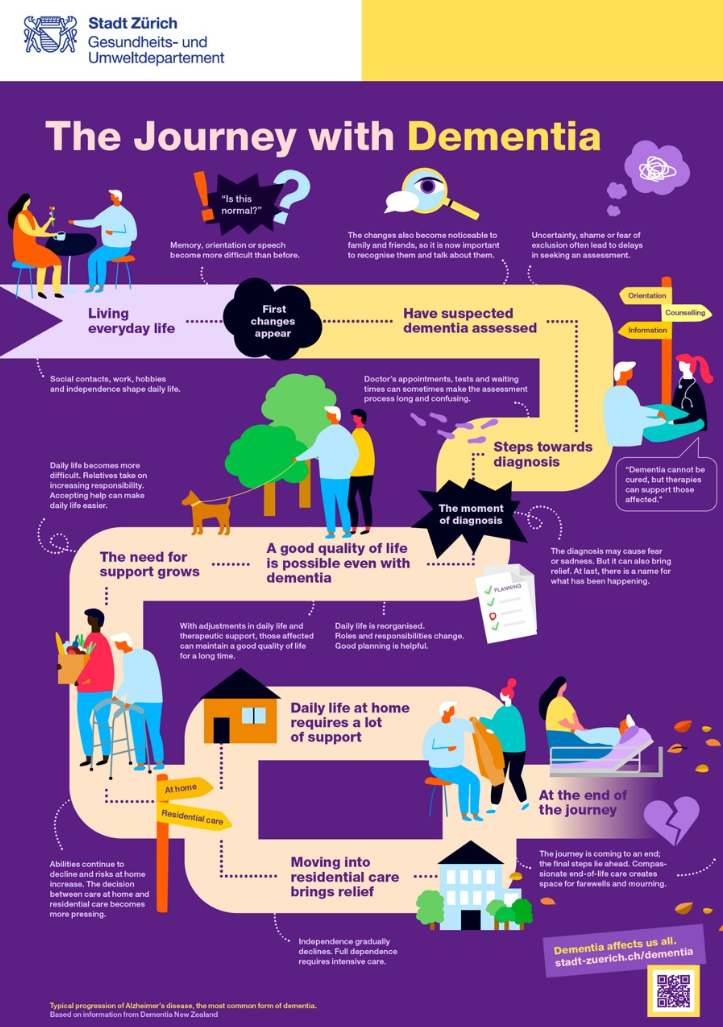
Dementia progresses differently, depending on what type of dementia someone has. A typical journey with Alzheimer’s disease is described below.
- Memory, orientation or speech become more difficult than before.
- The changes also become noticeable to those around the person concerned. It is now important to look into these changes and talk about them.

- Uncertainty, shame or fear often cause people to delay seeking an assessment.
- Early assessments are worthwhile. Today there are treatments that can slow the progression of dementia. There are different treatments for the different types of dementia. This is why it is important to identify the form of dementia at an early stage.

- The diagnosis may cause fear and grief, but it can also bring a sense of relief. Finally there is a name for what the person has been experiencing.
- There are some legal and organisational issues that should be addressed at an early stage.

- Daily life is reorganised, roles and responsibilities change.
- Good planning is helpful.
- Adjustments in daily life and therapeutic support can improve people’s quality of life.

- Daily life becomes more difficult.
- Relatives often take on increasing responsibility.
- Accepting help can provide relief in daily life.

- Capabilities continue to decline and risks in daily life increase.
- The decision between care at home and residential care comes to the fore.

- The journey is coming to an end, the final steps lie ahead.
- Dignified end-of-life care can create space for farewells and mourning.
- In this phase relatives often face a dual challenge: mourning and readjustment in their own lives.