In order to develop a strategy for network development in 2040 that is geared to future needs, the scenarios developed by teams of experts and the population were condensed into a vision of the future of public transport 2050. This was presented to the public on August 31, 2021. It defines the five main thrusts that apply to the development of the VBZ network.
Media conference 31.8.2021
The five elements of the vision of the future
1. Public transport ring system

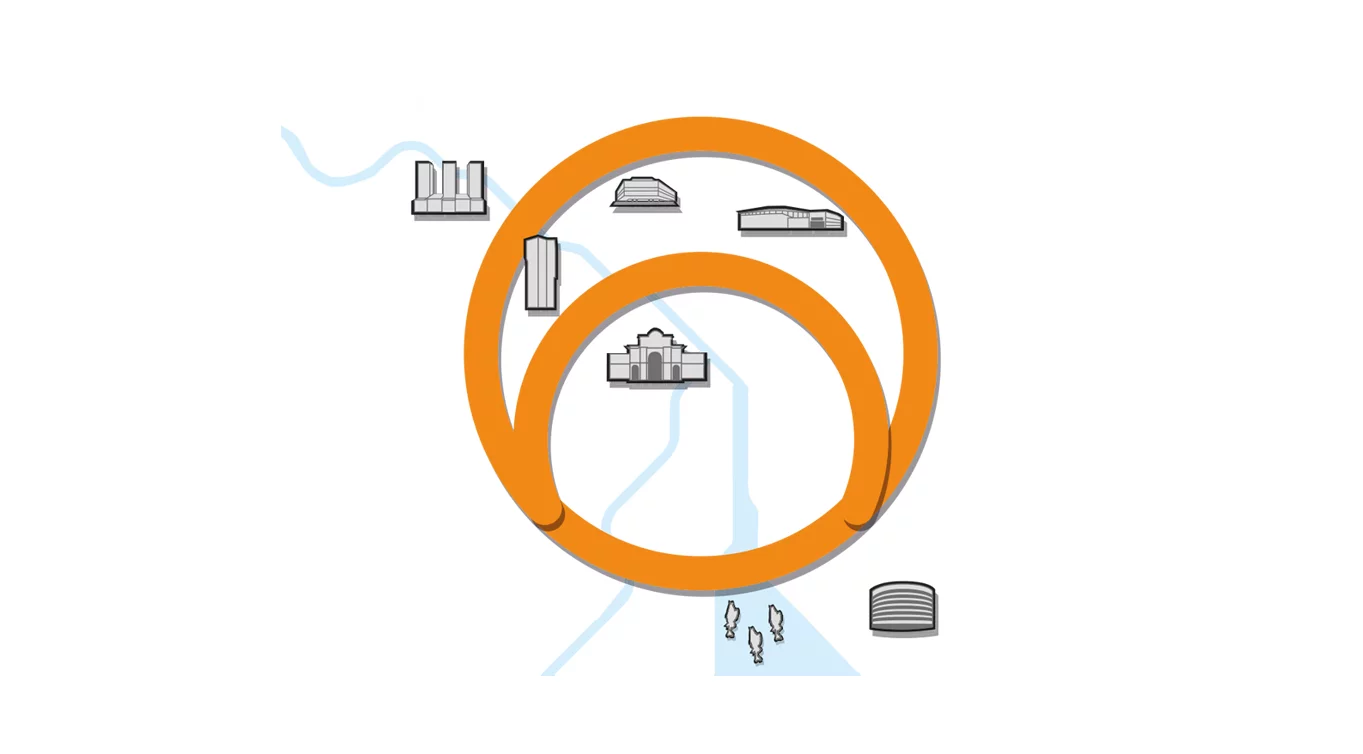
Today's public transport network, especially the tram network, in the city of Zurich is mainly geared towards the city centre. In the future, Oerlikon and Altstetten will become more important as other city centres. An outer ring system is to connect the city centres of Oerlikon and Altstetten and include Stettbach station in the northeast and Enge station in the southwest. This will allow passengers to get to their quarters quickly from the stations on the outskirts of the city. This ring system also serves to provide good access to Binz, ETH Hönggerberg and Schwamendingen as well as – no less important – to relieve the city centre.
2. Mobility hubs

Already today, different means of transport can be combined during the journey. Multimodal mobility hubs should further promote this switch and also take into account bicycles, e-bikes, scooters, e-scooters, car sharing or the footpath.
3. Digitization for detailed cataloguing

In districts or periods when fewer people are on the road and no main axes lead through them, digital services and "Mobility as a Service" (MaaS) are to be increasingly used as options for public transport development.
4. Upgrade main axes

The existing tram line between Oerlikon – Milchbuck – Rigiblick cable car – University area Zentrum – Bellevue / Stadelhofen is to be upgraded to an eastern tangent. Linked to the new tram tangents in the west, this would create an efficient tram service. This would offer direct connections to the university areas. VBZ would like to link the growing Balgrist-Lengg hospital district with good connections to the S-Bahn at Stadelhofen, as well as to the two western tram tangents. Final stops are to be placed where they are most useful. To this end, lines are to be extended and better connections to the S-Bahn are to be created, for example.
5. Further develop the remaining public transport network

Where bottlenecks exist today, they must be eliminated in the future with appropriate measures. This is in order to continue to offer reliable public transport. Thanks to a good connection of the new tangential connections with the urban and regional public transport network, new reliable connections with short travel times are also to be created in the surrounding area.
Network Development Strategy 2040
These five thrusts of the public transport 2050 vision have been examined in detail over the past two years by various planning experts from the city and canton and an external planning office with regard to their feasibility, feasibility and costs and summarised in the Network Development Strategy 2040.