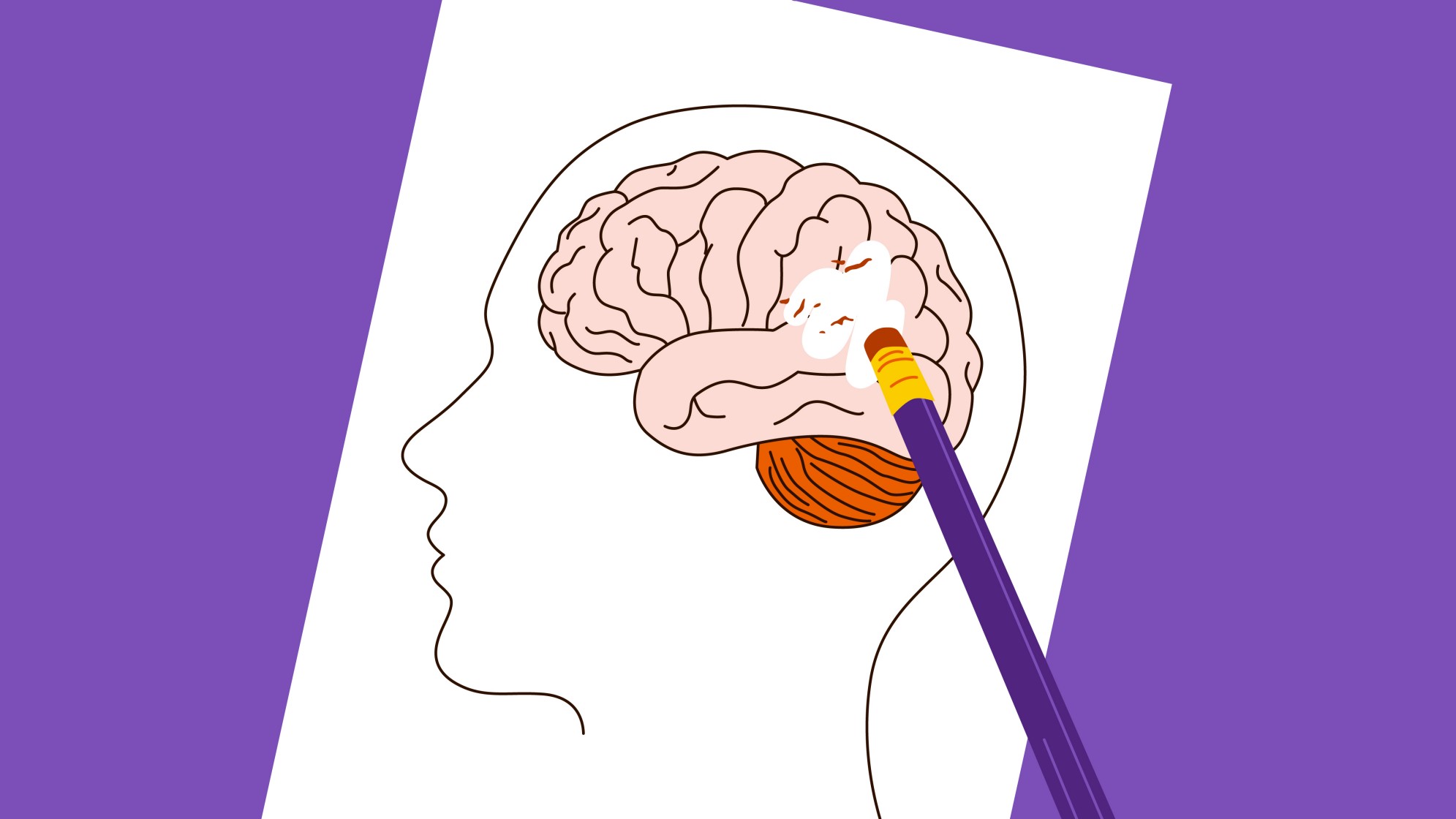
Dementia is an umbrella term for various diseases of the brain. In dementia, various brain functions decline. The most common form of dementia is Alzheimer's disease.
In dementia the function of the brain declines and continues to decrease over time. People affected often forget things and have increasing difficulty with thinking. Orientation can also become more problematic, perhaps in their own home or outside on the street. A lot of people with dementia also have problems speaking and understanding as well as doing simple arithmetic or learning. They often find it harder to make decisions than they used to. As the disease progresses, many people with dementia are no longer able to live on their own. Their personality can also alter over time.
There are two basic types of dementia, which can also occur in a mixed form:
1. Primary dementia
Most people with dementia have a primary form (about 90%). Primary dementia results from changes in the brain.
- The best known and most common form is Alzheimer’s disease (up to 65% of primary dementia cases).
- The second most common is vascular dementia (about 17% of primary dementia patients).
- Other common forms are frontotemporal dementia, Lewy body dementia and Parkinson’s dementia.
- There are also mixed forms, e.g. Alzheimer’s and vascular dementia.
- There are other, less common, forms which are not detailed here.
2. Secondary dementia
Around 10% of people with dementia suffer from a secondary form of the condition. Secondary dementia arises following another disease, e.g. vitamin deficiency, neurological diseases or metabolic disorders.
No. Not all people with dementia have Alzheimer’s.
Alzheimer’s disease (or Alzheimer’s dementia) is the most common form of dementia. In this disease the cells in the brain slowly die. This is why the ability to think and the memory of people with Alzheimer’s get worse and worse.
But there are other forms of dementia. The second most common form is vascular dementia. This condition has some different symptoms to Alzheimer’s and often progresses in a stepwise fashion.
In the city of Zurich around 8000 people are living with dementia. The figure for the whole of Switzerland is roughly 150,000. About 33,800 people every year are newly diagnosed with dementia in Switzerland.
The most common cause of dementia is old age. As the population in Switzerland is getting older, there will be more people with dementia in the future. It is estimated that there will be twice as many people with dementia in 2050 as there are today.
There are also younger people with dementia: up to 5% of those with dementia develop the condition before the age of 65.
More women than men suffer from dementia: two-thirds of those affected are female.
About 60% of people with dementia live at home. Most of them are cared for by their families, causing significant emotional stress and placing a great burden on their time and finances.
In Switzerland today the estimated total annual costs of dementia are 11.8 billion Swiss francs. 5.5 billion francs (47% of total costs) are borne by the family members. These costs correspond to the market value of unpaid care and support services provided by close friends and relatives.
The burden on the healthcare sector is also high and, given demographic changes (the Swiss population is ageing), the number of dementia patients will continue to rise. Staff shortages in hospitals and nursing homes, which are already a problem, will continue to escalate.
No, dementia does not only affect older people.
- Most people with dementia are aged over 65.
- But: up to 5% of people with dementia are younger than 65. This is known as early-onset dementia.
It is often more difficult to detect dementia in younger people. This is because, when faced with signs such as forgetfulness or concentration problems, people are more likely to think of depression or burnout at first.
- Age: The greatest risk factor is old age. The risk of developing dementia rises with increasing age.
- Gender: Women are more likely to be affected than men (approx. two-thirds are female, one-third male).
- hearing loss
- high LDL-cholesterol level
- depression
- brain injuries
- lack of exercise
- diabetes
- high blood pressure
- obesity
- excessive alcohol consumption
- social isolation
- low level of education
- air pollution
- sight loss
Other risk factors are an unhealthy diet, disturbed sleep and a lack of mental stimulation. Generally speaking, a healthy lifestyle can reduce the risk of developing dementia.
You cannot prevent dementia, but you can reduce the risk. It is good to follow a healthy lifestyle and ensure health problems are treated at an early stage:
- physical activity (walking, sports, etc.)
- healthy diet
- no alcohol
- do not smoke
- treat the following diseases at an early stage: high blood pressure, heart diseases, diabetes, obesity or depression. These are risk factors for dementia.
- remain mentally active (reading, listening to discussions, looking at documentation, etc.)
- keep up social contacts (contact with neighbours, family, colleagues, etc.)
- wear hearing aids, glasses or contact lenses, if needed
- protect against head injuries while doing sports and in everyday life (wear a helmet, etc.)
Symptoms differ, depending on the type of dementia.
There are other, less common, forms of dementia which are not detailed here.
From mid-life onwards our memories slowly get weaker. We are no longer able to process information as quickly and cannot learn new things as easily as we used to. This is why it is entirely normal to forget things from time to time – especially if you have a lot to do or remember at the same time.
But: is the forgetfulness happening with greater frequency? Is it perhaps accompanied by other problems? For example:
- problems with language
- difficulties carrying out everyday tasks
- or orientation difficulties
It may be worthwhile having a dementia assessment carried out.
People with Alzheimer’s disease may exhibit the following symptoms:
- Frequently forgetting: They often forget important appointments, conversations or experiences.
- Worse short-term memory: They can no longer retain new information.
- Problems with familiar routines: In daily life people have increasing difficulty with everyday activities, e.g. cooking or driving. They forget steps in a process or they mix up the sequence.
- Language problems: They forget words mid-sentence. They leave sentences incomplete or use inappropriate terms.
- Orientation problems: They have trouble finding their way around in new places – on holiday, for example.
- Getting confused with objects: Things turn up in inappropriate places. For example, a purse might be left in the oven or carrots found in the dishwasher.
- Problems with decision-making: They have difficulty making decisions – when making bank transactions, for example. Or they struggle to choose the right clothes to suit the weather.
- Changes in behaviour and mood swings: Personality appears to alter. People withdraw, are often sad, anxious, suddenly angry or lose interest in activities.
People with vascular dementia may exhibit the following symptoms:
- Difficulties with attention and concentration: They are more quickly distracted and lose their thread more easily. For example, they forget boiling water on the stove (e.g. when making tea). They make mistakes more frequently when they are performing familiar tasks. Their concentration levels drop more quickly and they need more breaks.
- Slowed thinking: People take longer to understand and answer a question.
- Speech and language disorders: They cannot remember names of objects straight away. They struggle to formulate sentences.
- Changes in behaviour: They withdraw from social situations. They get irritated and frustrated about trivialities.
- Problems with walking: They walk more slowly and are unsteady on their legs. They lose their balance more easily when turning round or turning their head.
Behavioural changes, personality changes and speech and language problems are at the forefront in frontotemporal dementia. Memory is often still good in the early stages, unlike in Alzheimer’s.
The most significant symptoms:
- People affected say or do things that appear inappropriate.
- They show less interest in family, friends or hobbies.
- They have less energy and less motivation and always stick to the same habits.
- They have a large appetite and eat unusually fast.
- They struggle to think of words and their speech gets slower.
- They no longer understand some words.
- They find it increasingly difficult to plan their daily life and make decisions.
- They forget appointments.
- They walk unsteadily and their movements are stiff.
- They struggle with speaking and swallowing.
Lewy body dementia has similarities to Parkinson’s and Alzheimer’s.
Typical symptoms:
- Significant fluctuations of attention
- Visual hallucinations (seeing things that are not there)
- Movement disorders similar to those in Parkinson’s: movements start more slowly or take more time, short steps, shuffling gait, the face looks less animated, speech can become quieter or monotone.
- Sensitivity to certain medicines
Parkinson’s dementia can develop during the course of Parkinson’s disease*.
Typical symptoms:
- Slowed thinking
- Concentration problems
- Memory problems
- Movement disorders: movements start more slowly or take more time, short steps, shuffling gait, the face looks less animated, speech can become quieter or monotone.
*Parkinson’s is an incurable, progressive neurological disease.
Early assessments are worthwhile. Nowadays there are therapies that can slow down the progression of dementia. There are different treatments for the different types of dementia. This is why it is important to identify the form of dementia at an early stage.
Several steps are involved in making a diagnosis
- GP as the first point of contact:
The GP will talk to the person concerned and possibly their close relatives as well. Observations from those close to a person can help with the diagnosis.
GPs also do some small tests: they will check the most important brain functions. - Testing for other diseases:
If the GP notices something unusual about a person’s brain function, they will investigate whether this could be due to some other underlying illness. This usually involves doing blood tests and taking images of the brain (e.g. a CT or MRI scan). The symptoms are sometimes found to be caused by another disease. In most cases suitable treatment can then help to improve or even cure the condition. - Testing in a memory clinic:
If the GP does not find any other disease to be the cause, specialised investigation in a memory clinic is required. This is where specialists carry out various medical and neuropsychological tests. Based on the tests they will establish: Is it dementia? What form of dementia is it? At what stage is it?
You should ideally approach your GP with initial questions and/or symptoms. GPs can arrange further assessment, if required.
Dementia progresses differently, depending on what type of dementia someone has.
- Mild Alzheimer’s disease: At the start, it is mainly short-term memory that is affected. People no longer remember an arrangement they made yesterday, for instance, or they struggle to follow a conversation. They might also start having problems finding words. They forget what individual objects are called. They may experience their first orientation problems: someone might have trouble finding their way around in unfamiliar places (e.g. on holiday). This phase usually lasts 3 to 5 years.
- Moderate Alzheimer’s disease: In this phase important memories slowly disappear, for example memories of special life events. Conversations become more difficult because people’s understanding of speech gets worse. They also have orientation problems in familiar places. They think increasingly about the past and may sometimes believe they are young again.
- Severe Alzheimer’s disease: At this stage long-term memory is also greatly affected. People live in their own world and hardly have contact with reality anymore. They only say a few words and also have physical problems, such as walking difficulties. In this phase people often need to move into a nursing home.
Vascular dementia can arise when the brain does not receive enough blood supply. If brain cells receive too little oxygen, they will be damaged or die. This happens, for instance, when blood vessels are narrowed or inflamed or when there is bleeding in the brain. The disease starts and develops differently, depending on what the exact cause is.
- In vascular dementia symptoms often begin earlier, suddenly and more severely than in Alzheimer’s.
- The symptoms are also dependent on which region of the brain is affected.
- Memory problems are less pronounced.
- People often experience difficulties with speaking and thinking as well as concentration problems.
- Other possible symptoms are mood swings and depression.
- Physical weakness and paralysis may also occur.
- Slowing of thought and action is noticeable.
In the late stage the symptoms of Alzheimer’s and vascular dementia are similar.
Frontotemporal dementia often starts relatively early, usually between the ages of 45 and 65.
- At the outset changes in behaviour and language problems are noticeable, whereas the memory is usually still good.
- Later people also have problems with movement and they find it more difficult to plan tasks.
- The symptoms slowly but steadily get worse.
The condition of people with Lewy body dementia fluctuates widely: they sometimes appear lucid, then at other times confused.
- They see things that are not there (hallucinations).
- They experience movement problems similar to those of Parkinson’s disease.
- Falls are common.
- The course of the disease is slow but progressive.
Parkinson’s dementia usually progresses slowly and steadily.
- For a long time motor problems are the prominent feature: tremor, stiffness, slowing.
- Later people experience concentration problems and slowness of thought, followed by memory problems.
- Swallowing and gait disorders are common.
About 90% of dementia cases are chronically progressive. This means a person’s condition will deteriorate and there is no cure.
But: targeted therapies can slow down progression of the disease. This enables people with dementia to maintain their independence for longer. The quality of life of those affected, their families and caregivers is thus improved.
About 10% of dementia cases can be partially or even completely cured. These are known as secondary dementias. Their cause lies in another, treatable underlying condition, such as a vitamin deficiency or a metabolic disorder. It is important that these underlying conditions are detected and treated early.
There are drug treatments and non-drug treatments. In most cases both are used in combination.
There are various drugs that are useful, especially at the start of the disease. They help to slow down the breakdown of important substances in the brain.
Other medications may be used in the middle and late stages of dementia. They can improve thinking skills and mental performance. The Alzheimer Schweiz website provides more information: Medikamentöse Therapie bei Demenz.
Various treatments help those affected and their families, enabling them to live better with dementia:
- Memory training keeps the brain fit for longer.
- Occupational therapy enables people with dementia to stay independent for longer when doing their cooking and shopping or reading a newspaper (maintaining activities of daily living).
- Physiotherapy assists with movement, balance and coordination. This reduces the risk of having falls and keeps the body fit.
- Speech therapy: This therapy supports language, speech, understanding and swallowing.
- Music, painting or dance therapy: These forms of therapy can arouse positive emotions, improve mood and help provide contact with other people.
- Psychotherapy: This helps people cope better with the disease.
- Life story work activates memories and gives emotional security.
Those affected by dementia can also be engaged and encouraged in everyday activities. It is important to choose subjects and activities that give them pleasure and do not ask too much of them. The activities should not be too difficult, but not too easy.
Many people with dementia have additional complaints, for example:
- mood swings
- anxiety
- agitation
- depression
- hallucinations
- sleep disturbances
- aggressive behaviour
These complaints can also be treated with drug treatments and non-drug treatments.
Specialised providers of drug treatments and non-drug treatments can be found at Services and Support under «Health assessment and treatment» and «Therapeutic and Health-Promoting Services».
Living with dementia presents various challenges. On the page Living with dementia you can find answers to frequently asked questions on subjects such as first steps after diagnosis, legal issues, safety or communication.
Becker, S. (2018). DEMENZ. Den Alltag mit Betroffenen positiv gestalten, Ein praktischer Ratgeber für Angehörige. Zürich: Ringier Axel Springer Schweiz AG.
Bopp-Kistler, I. (2022). Demenz. Fakten Geschichten Perspektiven. 3. Auflage. Zürich: rüffer & rub Sachbuchverlag GmbH.
Dilling, H., Mombour, W. & Schmidt, M.H. (2015), ICD-10: Internationale Klassifikation psychischer Störungen. ICD-10 Kapitel V (F). Klinisch-diagnostische Leitlinien. 10. überarbeitete Auflage. Bern: Hogrefe AG.
Dutoit, L., Zufferey, J. & Pellegrini, S. (2024). Behandlungsverläufe von Demenzpatientinnen und -patienten. Analyse der vorhandenen Daten (Obsan Bericht 15/2024). Neuchâtel: Schweizerisches Gesundheitsobservatorium.
Hrsg. Swiss Memory Clinics, Nationale Plattform Demenz (Bundesamt für Gesundheit BAG) (2024). Diagnostikempfehlungen Demenz. Die Empfehlungen der Swiss Memory Clinics für die Diagnostik der Demenzerkrankungen – ein Update.
Hrsg. Swiss Memory Clinics, Nationale Plattform Demenz (Bundesamt für Gesundheit BAG) (2024). Therapieempfehlungen Demenz. Die Empfehlungen der Swiss Memory Clinic für die Therapie der Demenzerkrankungen.
Ecoplan. Versorgungsstrukturen und -angebote für Menschen mit Demenz und ihre Angehörigen in den Kantonen. Ergebnisse der Befragung der Kantone und regionalen Sektionen von Alzheimer Schweiz 2023. Bern: Bundesamt für Gesundheit.